|
Food Safety
Food safety continues to be an important issue that needs to be addressed, it is an issue that concerns everyone (producers, farmers, stores and consumers).
Our farm prides itself on covering all the basis related to food safety. As with every other part of our business, innovative technology plays an important role in this effort. A series of standard procedures are meticulously followed throughout the entire manufacturing process.
|
Food Safety on the Farm
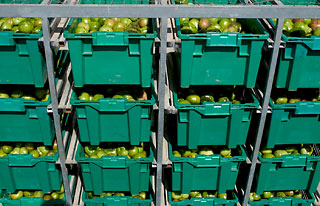
Our family farm is committed to growing wholesome vegetables and herbs in accordance to federal and state food safety guidelines. All employees participate in the food safety training program provided by the University of Florida. In addition, the farm undergoes third-party audits and routine inspections to insure proper handling as well as field sanitation. Our Family Farm's 10,000 square-foot packinghouse is certified by the Florida Department of Agriculture. Potential buyers, current customers and chefs are always welcome to tour the packinghouse and greenhouses.
|
 |
|
 Sustainable Agriculture Sustainable Agriculture
What does it truly mean to practice sustainable agriculture?
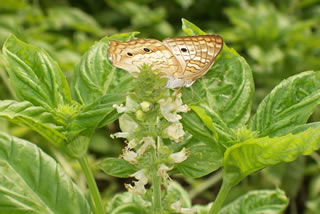
For decades our family farm has practiced integrated pest management to decrease its usage of pesticides. Integrated Pest Management (IPM) is an effective and environmentally sensitive approach to pest management that relies on a combination of common sense practices. IPM programs use comprehensive information on the life cycles of pests and their interaction within the environment.
This information is used to manage pest damage by the most economical means, and with the least possible hazard to people, property and the environment.
Our Farm is a Sustainable Farm
A Sustainable Farm grows their crops while protecting their plants, their people and their planet for future generations to enjoy!
* We use a balanced holistic approach to farming by using management tools and science/technology to protect our natural resources and our crops. Our growing decisions use best management practices(BMPs) that are designed to be socially, environmentally and financially sound for both our farm's short and long term future.
We carefully follow the University of Florida research and integrate these practices into our farm whenever possible.
Examples are:
• Our heirloom tomato greenhouses are surrounded in silver coating so pests such as white fly do not enter.
• Sticky traps containing pheromones that attract certain type insects such as white fly, thrips & more are used inside the greenhouse.
• Natural predators (good bugs to eat the bad bugs) are released to control certain pests.
• Plant based green chemistry is also used on our farm. (www.epa.gov/greenchemistry) Our farm also grows the right crop in the right places, reducing its dependence on fertilizers and water. Microjet irrigation in the tomato greenhouses means that more water is conserved. In our herb and lettuce greenhouses a closed irrigation system is used which means the water is recycled and used over and over again.
• During the summer months we hand-weed our outdoor vegetable block lines, apply a Hydra-Hume DG to build friendly microorganisms in the soil and then cover the mixture with clear plastic mulch using solarization to sterilize the soil.
Our larger fields are rotated with other sustainable family farmers and planted with bean crops so nitrogen and other soil nutrients are naturally replaced.
Come visit our farm the first Sunday of our harvest months (November through April) from 1 to 4 PM. See for yourself !
|
|
|
Good Agricultural Practices
GAP is voluntary guidelines to insure a clean and safe working environment for all employees. These guidelines or practices also assist in eliminating the potential for contamination of food products. Modeled after the FDA's Good Manufacturing Practices (GMP), this program uses Primus labs format and third-party auditors. GAP addresses the agricultural issues of site selection, adjacent land use, fertilizer usage, water sourcing and usage, pest control and pesticide monitoring, cooler operations, harvesting practices, worker hygiene, packaging storage, field sanitation and product transportation. GAP sanitation practices mandate use of extensive sanitation equipment (including gloves, aprons and hairnets), a meticulous cleaning schedule, minimizing human contact with fruit, and a strong emphasis on personal sanitation.
USDA also audits our farm annually. This USDA compliance is your guarantee that we are providing the safest, cleanest growing environment possible.
|
|
Informative Links on Food Safety
National Food Safety Database
Cornell University Department of Food Science
Florida Department of Agriculture and Consumer Services
|
|